
Group Community Access vs 1:1 Support and Which NDIS Option Fits Best
Choosing between group community access vs one on one support comes down to whether you want tailored skill-building or shared social connection. One-on-one support gives you a dedicated worker and flexible pacing, while group programs split the hourly rate across peers so your funding stretches further each week.
Key Takeaways
Budget stretch: A 1:3 group ratio divides the standard $73.58 hourly rate by three, giving you roughly triple the weekly support hours on the same budget.
Sensory and pace fit: Individual sessions suit people who experience sensory overload or need private skill practice, whereas groups thrive on peer modelling.
Flexible blending: You never have to pick just one option, and most participants mix both models across the week.
Out-of-pocket rules: NDIS plans fund the worker's time, while you pay directly for personal expenses like meals, event tickets, and entry fees.
Understanding the Difference Between Both Models
When families across Pakenham, Cardinia Shire, and Gippsland sit down to plan their weekly supports, this comparison almost always comes up first. Both options sit under the same umbrella of social and community participation, yet they feel completely different day to day.
How One-on-One Community Access Works
One-on-one support pairs you with a single support worker who focuses entirely on your goals for the whole session. We often describe this as having a steady, familiar mentor walking alongside you rather than navigating a crowd.
Your worker adapts to your communication style, energy levels, and individualised pacing. You might use these hours to catch a V/Line train from Pakenham, practise ordering lunch at a quiet cafe in Warragul, or build independent living skills at a local gym.
How Group Community Access Works
Group community access brings multiple participants together for structured social outings, workshops, or shared hobbies. One or more workers facilitate the session using a shared support worker ratio, such as 1:2 or 1:3.
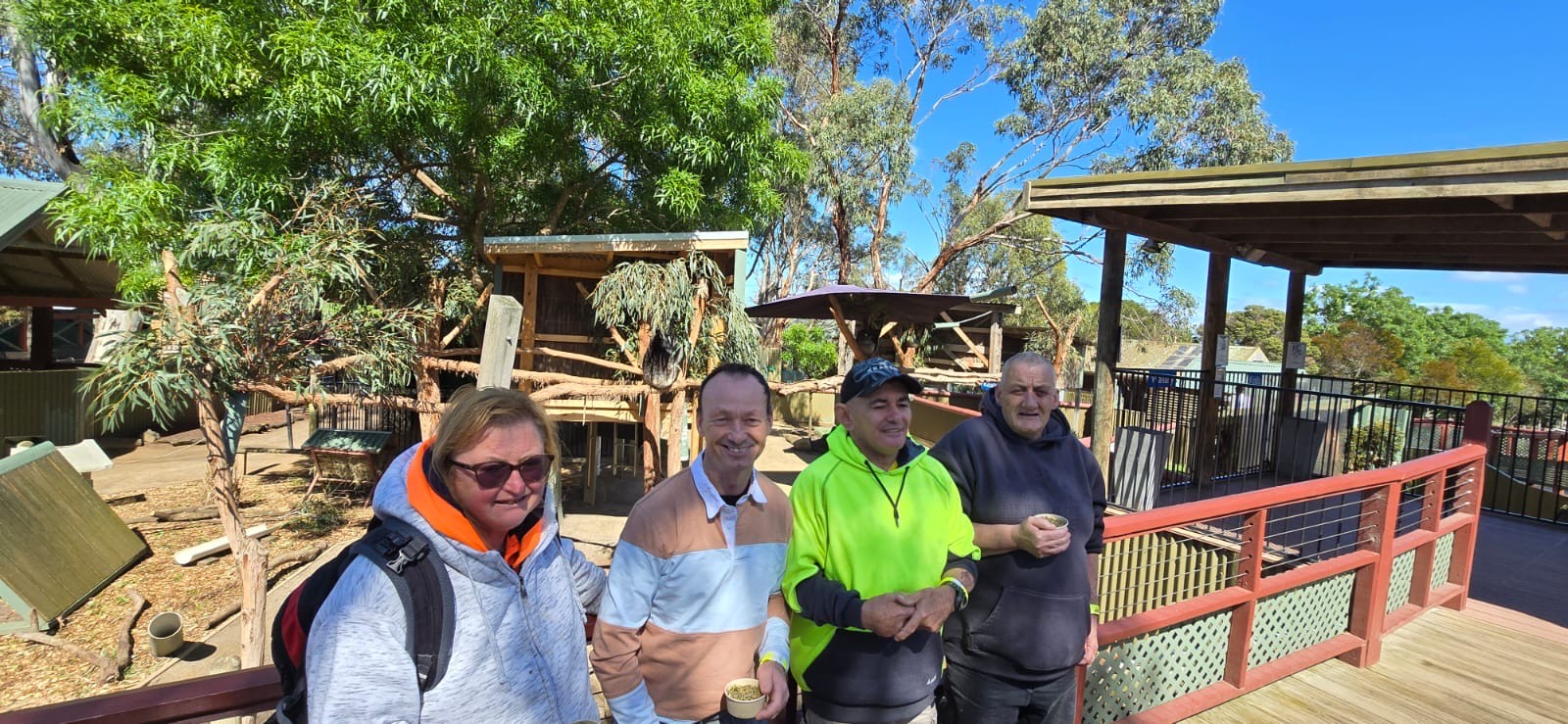
Instead of working in isolation, you join a regular social crew. Activities often include group cooking in a shared kitchen, art classes, walking groups along local trails, or men's shed sessions across regional Victoria.
Side-by-Side Comparison of Ratios, Costs, and Daily Experience
Comparing group community access vs one on one support is much easier when you look at how each model handles money, sensory load, and scheduling side by side.
1:1 Community Access Profile
Support worker ratio: 1 worker to 1 participant (or 2:1 for complex physical or behavioural needs).
2026-27 standard weekday rate: Up to $73.58 per hour.
Sensory load: Low and controlled, making it easy to step away from noisy spaces.
Schedule flexibility: High, because sessions shift around your personal routine and energy levels.
Best goal fit: Public transport training, sensitive errands, and managing high social anxiety.
Activity costs: You pay for your own meals, coffee, and venue entry fees.
Group Community Access Profile
Support worker ratio: 1 worker shared across 2, 3, or more participants.
2026-27 standard weekday rate: $36.79 per hour (1:2 ratio) or $24.53 per hour (1:3 ratio).
Sensory load: Moderate to high, with shared conversations, group movement, and background noise.
Schedule flexibility: Fixed, running on a set weekly timetable.
Best goal fit: Making friends, peer motivation, and building a consistent social routine.
Activity costs: You pay for your own meals, coffee, and venue entry fees.
How They Are Charged Under the NDIS
According to the NDIS Pricing Arrangements and Price Limits, group programs are not a cheaper or lower-quality tier of care. Instead, the NDIA requires providers to divide the standard hourly price limit equally among the people attending.
Core Supports vs Capacity Building Funding
Most community outings are funded through your Core Supports budget under Assistance with Social, Economic and Community Participation. If your goal involves structured mentoring or formal travel training, you can also use Capacity Building funding under Increased Social and Community Participation.
Both budgets cover individual and group formats as long as the support meets the reasonable and necessary criteria in your plan. Our guide to social and community participation funding explains both rates.
Breaking Down the 2026-27 Hourly Math
For standard weekday daytime support, the national maximum price limit is $73.58 per hour (or $79.60 per hour for high-intensity complex support). In a 1:1 session, your plan pays 100% of that hourly rate.
In a 1:2 group, each participant pays $36.79 per hour. In a 1:3 group, that drops to $24.53 per hour, meaning a fixed Core budget buys roughly triple the weekly community hours.
Unbundled Extras and Out-of-Pocket Expenses
Three extra billing rules often catch participants off guard when signing a Service Agreement:
Centre Capital Cost: If a group program runs inside a provider building rather than out in public, providers can claim up to $2.71 per hour per person for facility overheads.
Activity-Based Transport: Providers can claim worker travel time and kilometres when driving you between Pakenham, Officer, or Gippsland towns during a session.
Out-of-Pocket Expenses: Under the NDIA Reasonable and Necessary Supports guidelines, NDIS funding pays strictly for the worker, so you pay for your own coffee, lunch, movie tickets, or gym entry.
When One-on-One Support Is the Better Choice
Research from the Australian Institute of Health and Welfare shows that 45% of adults with disability avoided social situations in the past year, while 34% face barriers using public transport. Jumping straight into a busy group often backfires when anxiety or access barriers are high.
We recommend starting with 1:1 support if you fit any of these situations:
You experience sensory overload: Crowded venues, loud chatter, and sudden changes in group plans can quickly drain your energy. A single worker can steer you toward quieter spaces and take breaks whenever you need them.
You are learning sensitive or practical skills: Practising personal budgeting at a bank, attending medical appointments, or learning a new bus route works far better without an audience watching.
You have complex physical or behavioural needs: High-intensity health supports, manual transfers, or dedicated communication support require undivided focus that a shared ratio cannot safely provide.
When Group Community Access Fits Best
Social isolation affects 19% of working-age Australians with disability, which is double the rate of the wider population. Spending every week only with paid staff can leave you feeling disconnected from peers your own age.
Group programs work well when you want shared momentum:
You are motivated by peer modelling: Seeing someone else try a new recipe, speak up in a workshop, or join a local game builds confidence in ways a paid worker cannot replicate.
You want genuine friendships and routine: Fixed weekly groups create predictable touchpoints where casual conversations turn into real friendships over time.
You want more hours out of the house: Sharing a 1:3 ratio lets you stay active in the community two or three days a week instead of using up your entire budget in one afternoon.
The Three-Step Pathway to Combining Both Supports
You do not have to choose between group community access vs one on one support for the entire length of your plan. In our experience across Victoria, the strongest results happen when participants use both models as stepping stones toward independent living.
Step 1: Build Confidence With Individual Scaffolding
Start with 1:1 support to master foundational routines in a low-pressure setting. Your worker uses gradual prompt fading, stepping back bit by bit as you learn how to catch the train, handle money, or manage social anxiety in public.
Step 2: Transition Into a Small Matched Group
Once your baseline confidence grows, add a weekly small-group session while keeping a few 1:1 hours for personal errands. Always ask for a one- to two-week trial session first so you can check the group dynamics, noise levels, and worker facilitation before committing.
Step 3: Step Into Mainstream Community Inclusion
Paid NDIS programs should act as a bridge, not a permanent destination. As your social stamina improves, your worker can help you join mainstream local sports clubs, hobby groups, or volunteering roles in Cardinia Shire or Gippsland with little or no paid support.
What Each Option Looks Like at Curamus
Living in outer-suburban growth corridors like Pakenham or regional centres across Gippsland brings unique transport and community realities. Public bus routes can be spread out, so matching the right support model to your local area makes a big difference.
Our group community access program suits people who want company and routine. We keep group ratios small, match participants by shared interests and energy levels, and run structured outings across local community hubs.
Our 1:1 support suits people working on a personal goal with one worker. Whether you live with psychosocial disability, autism, or physical disability, we match you with a consistent local worker who respects your pace and builds practical independence.
Frequently Asked Questions
Can I use both group community access and one on one support in the same NDIS plan?
Yes, you can blend both models within the same week using your Core Supports or Capacity Building budgets. Many participants use 1:1 support for personal errands and travel training, then join a 1:3 group program once a week for social connection and budget efficiency.
Why does one on one support cost more per hour than group activities?
One-on-one support costs more because 100% of the support worker's hourly rate is billed to your individual plan. In a group setting, the NDIS requires providers to split that exact same hourly rate equally among all participants attending, reducing your hourly spend.
Does the NDIS pay for meals, entry tickets, or club fees during outings?
No, NDIS funding only covers the support worker assistance needed for you to attend and participate safely. You pay for your own everyday out-of-pocket expenses, including cafe meals, cinema tickets, gym memberships, and workshop materials, just like any other community member.
How can I trial a group program before committing to a regular schedule?
You can ask your provider for a single visit or a short two-week trial session before signing an ongoing Service Agreement. Observing an active session lets you meet the support workers, check the sensory environment, and see whether the group pace feels comfortable.
Find the Right Support Mix for Your Goals
Our local team across Gippsland, Cardinia Shire, and Pakenham can help you compare ratios, review your Core budget, and arrange a trial session that fits your routine.