
How Core Support Works for Disability Support at Home
Disability support at home helps you carry out daily living routines safely while living in your own residence. Under the National Disability Insurance Scheme (NDIS), your Core Supports budget funds hands-on help with personal care, meal preparation, and basic domestic chores when approved as reasonable and necessary. We work with participants across Victoria so each support hour serves clear, personal goals.
Key Takeaways
Disability support at home uses the Assistance with Daily Life category within your NDIS Core Supports budget.
Support staff help with personal hygiene, cooking, light cleaning, and everyday life skills.
Funding eligibility depends on functional capacity evaluations and NDIS criteria.
Hourly rates match price limits set by the National Disability Insurance Agency.
Self-managed and plan-managed participants have full choice over their workers.
How Your Core Budget Funds Disability Support at Home
Getting disability support at home starts with your NDIS plan structure. The scheme divides funding into three budgets: Core Supports, Capital Supports, and Capacity Building. Home daily living help comes directly out of your Core allocation.
The Core budget covers day-to-day tasks that you cannot complete without help due to your disability. It contains four separate categories:
Assistance with Daily Life: Covers personal self-care, cooking, and household cleaning.
Assistance with Social and Community Participation: Covers transport and worker time for community outings.
Consumables: Covers everyday items like continence pads or low-cost feeding aids.
Transport: Covers travel credits or direct payments for travel to work or study.
Assistance with Daily Life is the main category used for private home support. Figures from the Australian Institute of Health and Welfare show that 61% of Australians with disability living in households need help with daily activities. That number reaches 97% for individuals with severe or profound limitations.
Daily Tasks Covered by Your Support Worker
Once funding is active in your plan, a worker can visit your house to help with morning, afternoon, or evening routines. A one-on-one support worker helps with the basic physical tasks that keep your home orderly and clean.
Support workers assist with personal hygiene:
Showering, bathing, and drying
Dressing and selecting daily clothing
Toileting, bowel care, and hygiene upkeep
Safe bed transfers and movement around the house
Workers also assist with meals and household upkeep:
Planning recipes and preparing fresh ingredients
Washing dishes and sanitising kitchen benches
Vacuuming floors, mopping, and dusting
Washing clothes and changing bed sheets
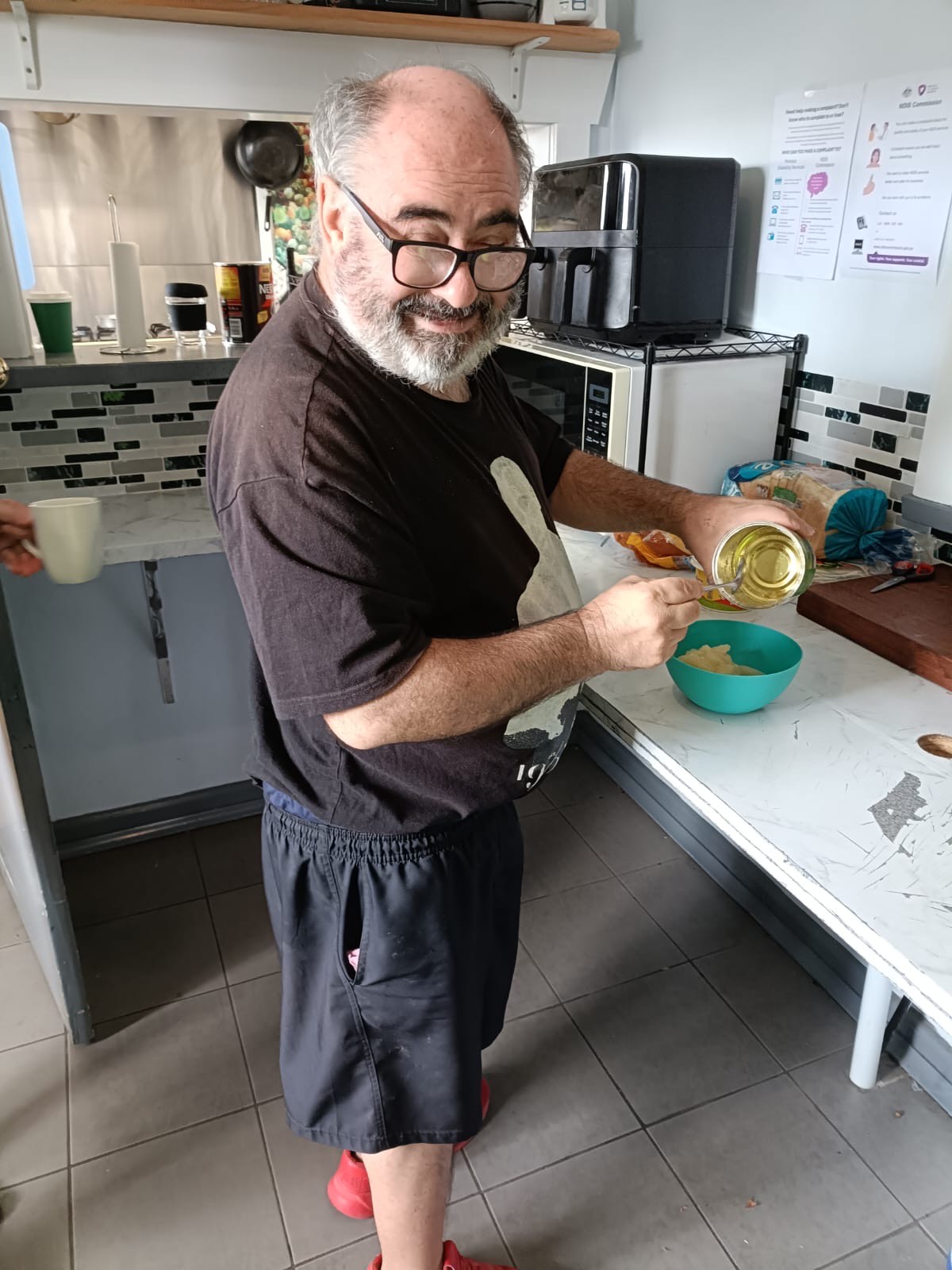
Home support also develops practical skills. Workers cook alongside you or show you methods for washing and sorting laundry so you can complete tasks on your own over time.
Qualifying for In-Home Daily Living Support
Getting funded disability support at home requires meeting criteria set by the NDIA. The agency evaluates all requests against the NDIA reasonable and necessary guidelines defined in Section 34 of the NDIS Act.
The NDIA reviews whether family members or state healthcare programmes already cover these tasks. Data published by Carers Australia indicates that unpaid carers assist 855,000 Australians with daily living. The NDIS provides funded assistance when that family support cannot continue or when informal help is unavailable.
Participants qualify for daily living support ndis plans by submitting clinical proof:
An occupational therapist functional assessment measuring your motor skills and mobility
A summary of daily risks and physical support needs from your GP
Input from your Support Coordinator detailing current home challenges
Your planner uses this clinical evidence to assign support hours and line items into your budget.
Understanding Hourly Rates and Travel Rules
The cost of disability support at home follows strict rules set in the NDIS Pricing Arrangements and Price Limits. Providers cannot bill above these official price caps.
Hourly rates vary based on the day and time of your scheduled shift:
Weekday Daytime (Item 01_011_0107_1_1): Maximum rate of $67.56 per hour
Weekday Evening (Item 01_015_0107_1_1): Maximum rate of $74.44 per hour
Saturday (Item 01_013_0107_1_1): Maximum rate of $95.07 per hour
Sunday (Item 01_014_0107_1_1): Maximum rate of $122.59 per hour
Public Holidays (Item 01_012_0107_1_1): Maximum rate of $150.10 per hour
House Cleaning (Item 01_020_0120_1_1): Maximum rate of $56.23 per hour
Plan management types decide how invoices get paid. Self-managed and plan-managed participants can select registered or unregistered providers and agree on shift schedules directly. NDIA-managed participants must use registered providers who submit invoices directly through the government portal.
Providers travelling to your home can claim travel time if you agree to it in your service contract. Under current NDIA guidelines, providers can claim up to 30 minutes of travel time in non-remote areas like Melbourne, Cardinia, and regional Gippsland centres.
In-Home Core Support Compared to Supported Independent Living
Participants often compare everyday drop-in care with dedicated accommodation funding. Both options support independence, but they operate differently.
Our In-Home Support provides scheduled hourly visits while you live in your own home or private rental. You pick the days, set the hours, and keep complete control over your lease and your living space.
Higher support needs may require Supported Independent Living. SIL provides continuous 24-hour staffing within a shared or individual residential home. This model fits participants who need constant supervision and care throughout the day and night.
Key differences between the two models:
Housing control: In-home care happens in your private residence, while SIL takes place in a dedicated provider home.
Care frequency: In-home care uses scheduled hourly visits, while SIL provides around-the-clock staffing.
Funding type: In-home care uses your Core budget, while SIL uses separate Capital and SIL allocations.
Setting Up Trusted In-Home Disability Support Services
Arranging dependable in home disability support services requires choosing an experienced, reliable provider. When setting up supports in Victoria, check that your provider follows the standards of the NDIS Quality and Safeguards Commission.
Vetting steps you should check before workers begin:
Valid NDIS Worker Screening Checks and police clearances
Current First Aid and CPR certificates
Practical training in safe lifting and manual handling
Every arrangement needs a written service agreement. This document lists your shift times, hourly billing rates, cancellation rules, and backup staffing options if a regular worker is sick.
Curamus delivers reliable disability support at home across Pakenham, Cardinia, and Gippsland. Our team matches you with consistent local workers who turn up on time and respect your home environment.
Frequently asked questions
What is ndis assistance with daily life?
Assistance with Daily Life is a funding category under the NDIS Core budget. It pays for support staff to help you with personal hygiene, meal preparation, dressing, and routine domestic chores in your home.
How many hours of disability support at home can I get?
Your hours depend on your functional capacity assessment and your NDIA plan approval. Some participants receive a few hours each week for house cleaning, while others receive daily shifts for morning and evening self-care.
Can in home disability support services help with yard maintenance?
Basic yard upkeep and path clearance can be funded under Core domestic support if your disability stops you from doing it safely and you do not have family members available to help.
Can I choose my own support workers for daily living support ndis plans?
Yes. Participants with self-managed or plan-managed funding can hire the workers they prefer based on skills, personality, and schedule.
Start Your In-Home Support Plan
Our team can help you organise dependable daily living assistance that fits your household routine and personal goals.