
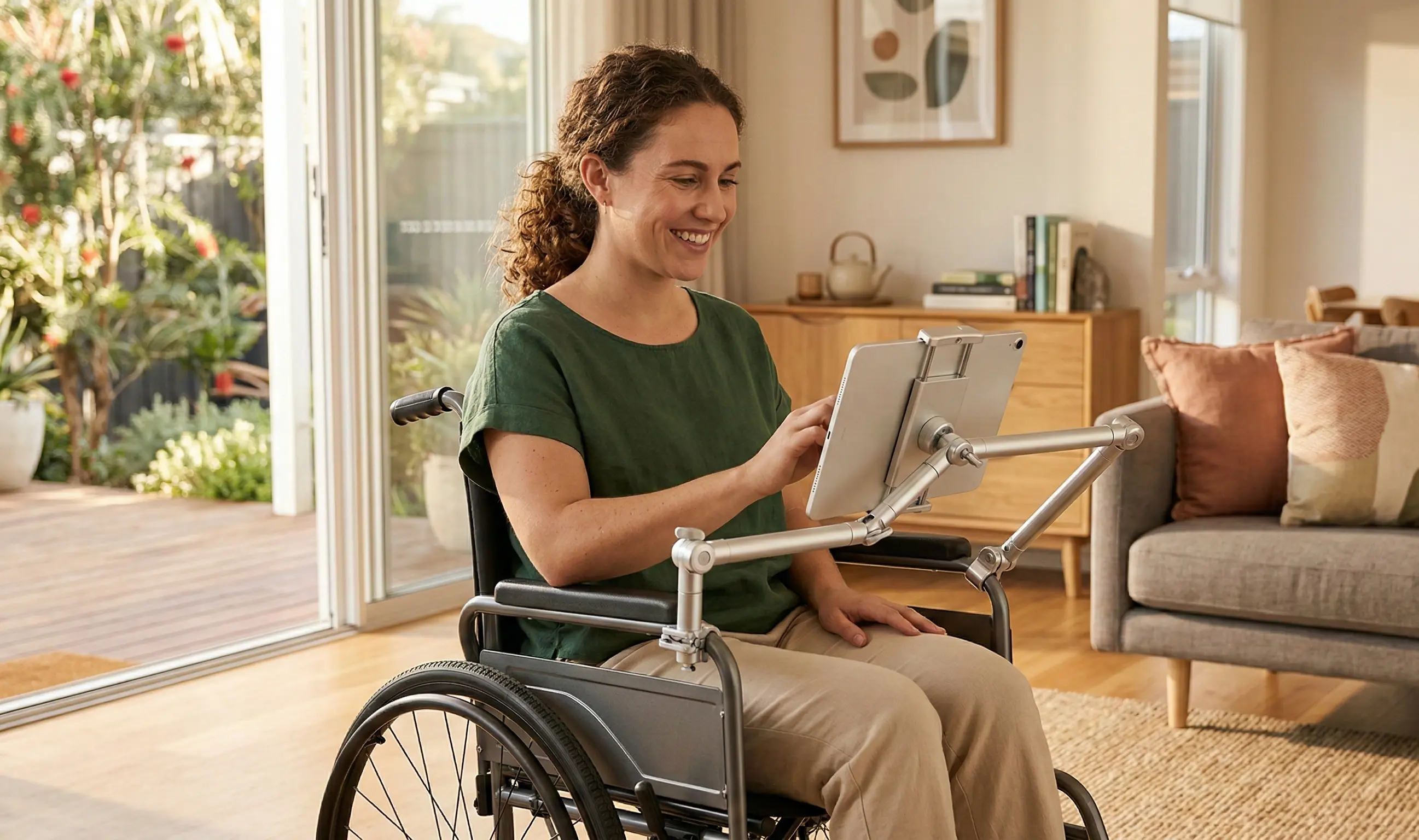
NDIS Assistive Technology Guide For Your Independence
Assistive Technology is any device or tool that helps you do things safely. The NDIS funds these items if they help you reach your goals and relate to your disability. You can get help for low-cost items or complex gear like power wheelchairs.
TL;DR: What You Need To Know
Assistive Technology (AT) includes everything from simple non-slip mats to complex speech devices. We use it to make daily tasks easier and safer for you. The NDIS looks at the cost and the risk of the item. Low-cost items under $1,500 are usually easy to buy. More expensive items need a report from a professional like an Occupational Therapist.
Curamus helps people in Gippsland and Pakenham find the right tools. We focus on your safety and your personal goals. Our team guides you through the trials and the quotes. We make sure the NDIS understands why you need the gear. This helps you live more independently at home or in the community.
What Is NDIS Assistive Technology?
Assistive Technology is equipment or systems that help you do things you cannot do because of a disability. These tools make life safer and much easier for you every day.
The World Health Organisation defines these tools as any system that increases your ease of movement or safety. The NDIS uses this same rule. It covers many things. You might need a simple reacher to grab cans. You might need a complex computer to help you speak. Both count as Assistive Technology.
We see how these tools change lives in Gippsland. A good tool reduces the need for constant physical help. It gives you back your power. It helps you stay in your own home for longer.
How Does NDIS Funding Work For Technology?
The NDIS puts money for these items into your Capital or Core budget. The way you get the money depends on how much the item costs.
The NDIS has three main price levels for these tools.
Low Cost: These items are under $1,500.
Mid Cost: These items cost between $1,500 and $15,000.
High Cost: These items cost more than $15,000.
You do not usually need a big report for low-cost items. You can often buy them from a regular shop. For mid-cost and high-cost gear, the NDIS needs more proof. They want to see that the tool is "Reasonable and Necessary." This means it must be fair and truly helpful for your specific needs.
What Are Low Risk And High Risk Products?
Low risk products are safe for you to use without help or special training. High risk products are complex and could cause harm if they are not set up right.
The NDIS looks at product risk to keep you safe. Low risk items are things like non-slip mats or basic walking sticks. You can buy these and use them straight away. They are easy to find in retail stores.
High risk items are different. These include power wheelchairs or complex beds. These items need a professional to fit them to your body. If the fit is wrong, it could hurt your skin or your posture. We always suggest talking to a pro before you buy complex gear.
Do You Need An Assistive Technology Assessment?
You need an assessment for any item that is high risk or costs more than $1,500. A qualified professional must write a report to show why you need the tool.
An Occupational Therapist or a Speech Pathologist usually does the work. They look at how you move and how you live. They check your home in Pakenham or Gippsland. They want to see where the tool will sit.
During an assessment, you will often try different models. This is called an equipment trial. It is a vital step. We want to be sure the tool works for you before the NDIS spends money. We found that trials prevent people from getting gear that sits in a cupboard.
Where Can You Get Local Support In Gippsland?
You can get local support from Curamus in the Gippsland and Cardinia regions. We understand the local area and can help you find the best providers near you.
Local focus matters. If your wheelchair breaks, you need someone nearby to fix it. We work with participants in Balook and Melbourne to find reliable local shops. We help you gather the three quotes you might need for the NDIS.
Our team knows the local parks and shops. We know which mobility scooters work best on our local paths. We use this local knowledge to give you better advice.
How Do You Make A Referral For Support?
You can make a referral by visiting our website or calling our local team. We will talk to you about your plan and your goals for new equipment.
We make the process simple for you. You can use our Make a Referral page to start. We will then sit down with you. We look at your In-Home Support needs. We see if 1-on-1 Support can help you learn to use your new tools.
Can You Use Your Core Budget For Tools?
You can use your Core budget for low-cost items if they relate to your disability. This is usually for items under $1,500 that you need for daily life.
These are often called Consumables. If you need help with Medical & Dental Appointments, you might need a portable ramp. If you have a goal for Supported Employment, you might need a special keyboard. Your Core budget is flexible. It allows you to buy these smaller items quickly.
Why Is Safety Important When Choosing Gear?
Safety is important because the wrong tool can cause injury or make your disability worse. Professional advice ensures the gear fits your body and your home environment.
We take safety seriously. We help you look at Supported Independent Living (SIL) options that include safe housing. Some gear needs regular checks. We help you plan for repairs and maintenance. This keeps your tools working well for years.
We also help people with NDIS Criminal Justice Support. They may need tools to stay safe and connected. Every person deserves the right tools to live well.
Frequently Asked Questions
Can I buy equipment from a normal shop?
Yes, you can buy low-cost items from retail shops. You must keep the receipt for your NDIS records. For big items, it is better to use a specialist supplier.
Who owns the equipment once it is bought?
You own the equipment because it was bought with your NDIS plan money. If the item was a rental, the company still owns it. Always check your agreement before you sign.
Can I get help to learn how to use my new tool?
Yes, the NDIS can fund training for you and your carers. This often comes from your Capacity Building budget. We can help you find a trainer in the Gippsland region.
Does the NDIS pay for repairs?
The NDIS usually pays for repairs for gear they funded. You should have money in your budget for maintenance. Keep your service records in a safe place.
How To Contact Curamus For Help?
You can contact us to discuss your Assistive Technology needs today. We are here to support participants across Victoria with high-quality care.
Phone: 0484 824 250
Email: enquiries@curamus.com.au
Hours: Monday – Sunday (8am - 6pm)
Contact Us: https://curamus.com.au/contact
Our mission is to provide tailored assistance. We dare to care about your independence. We want to see you reach your goals with the best tools available.
External Links for Reference:
Learn about the reasonable and necessary criteria for NDIS supports.
Read the World Health Organisation fact sheet on technology.
Check the NDIS Act 2013 for legal rules.
View the National Equipment Database for product ideas.
Visit EnableNSW for more equipment information.